Shapes Galore: A Preschool Adventure Workbook
Building Foundational Skills Through Play
For anyone involved in early childhood education—whether you are a teacher, a homeschooling parent, or a creative professional designing educational materials—the challenge is always the same: how to teach fundamental concepts without killing the joy of learning. Math Unit ShapeTrace & Color Pre-K to K is an educational resource designed to solve that problem. It moves beyond rote memorization and turns geometry into a tactile, visual experience. This workbook isn't just about filling in blanks; it is a carefully scaffolded journey that helps young learners connect the abstract idea of a "shape" to the physical world around them.
The core philosophy here is progressive learning. The unit begins with the absolute basics—circles, squares, and triangles. These are the building blocks of visual literacy. By starting with shapes that are easily recognizable, the workbook builds confidence. A child who can successfully trace a circle feels empowered to tackle a rectangle next. This gradual increase in complexity is crucial for maintaining engagement in the Pre-K to Kindergarten demographic. If the material is too hard, they get frustrated; too easy, and they get bored. This resource hits the specific middle ground required for effective retention.
The Anatomy of the Activities
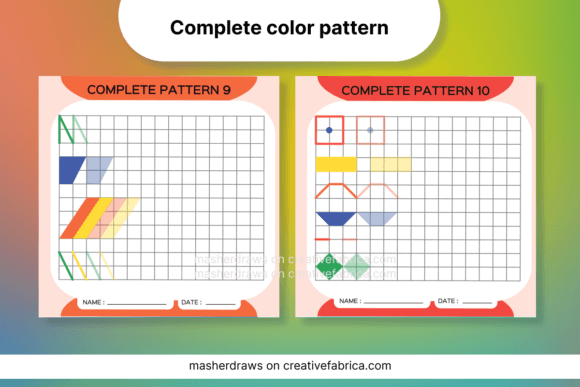
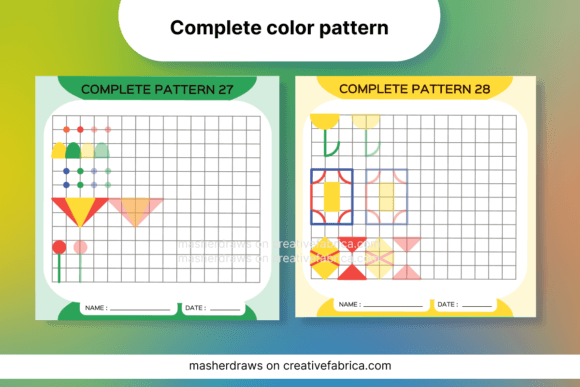
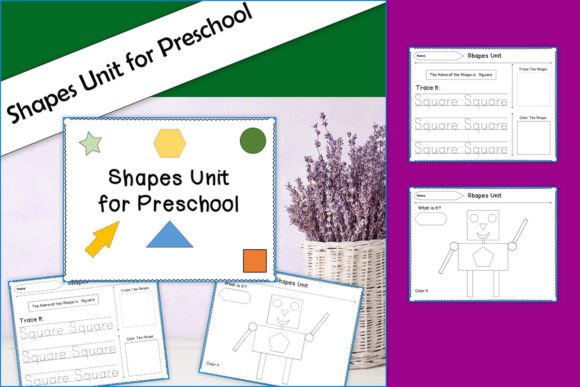
Let’s break down what makes the Math Unit ShapeTrace & Color Pre-K to K curriculum effective from a design and pedagogical standpoint. The workbook utilizes three distinct types of activities to reinforce learning:
- Trace the Shape and Color: This is the entry point. The visual characteristic here is clean, bold outlines. These outlines serve as guides for developing fine motor skills. When a child traces a star or a heart, they are practicing hand-eye coordination, which is a precursor to writing letters. The addition of coloring allows for creative expression, transforming a math lesson into an art project.
- Build a Home Using Geometric Shapes: This activity introduces context. A triangle isn't just a triangle; it's a roof. A rectangle isn't just a rectangle; it's a wall. By asking children to construct a home, the workbook teaches spatial awareness and composition. It shows children how different shapes fit together to create a whole, which is a fundamental concept in both geometry and design.
- Shape Vocabulary and Recognition: Throughout the pages, shapes are labeled with their names. This dual-coding approach—seeing the visual shape and the written word simultaneously—helps build vocabulary. It strengthens the neural pathways associated with object recognition.
Why This Resource Matters for Content Creators
If you are a publisher, blogger, or content creator in the parenting or education niche, Math Unit ShapeTrace & Color Pre-K to K represents a specific type of content asset. It is a "printable" resource. In the digital economy, parents are constantly searching for tangible activities that take their children away from screens. This workbook answers that demand.
From a marketing perspective, the appeal is in the specificity. You aren't just selling "math." You are selling "a quiet afternoon" or "a confident reader." The visual style of these workbooks tends to be friendly and uncluttered, avoiding the sensory overload found in many modern toys. This makes it an attractive product for brands focused on minimalist parenting or Montessori-style education.
Practical Application and Design Observations
When integrating resources like Math Unit ShapeTrace & Color Pre-K to K into your offerings or classroom, consider the following practical advice:
- Material Matters: These tracing activities work best with specific physical tools. Recommend thick crayons or triangular pencils for beginners. These tools are easier for small hands to grip, reinforcing the fine motor skills the workbook is designed to teach.
- Thematic Pairing: Don't let the workbook exist in a vacuum. If a child is working on the "Build a Home" section, pair that with a building block activity or a story about houses. This cross-modal learning reinforces the concepts of geometry and architecture.
- Digital Adaptation: For digital creators, consider how the spirit of this workbook can be adapted for tablets. While physical tracing is superior for motor skills, digital versions using a stylus can offer instant feedback and gamification elements that keep older preschoolers engaged.
Conclusion
Math Unit ShapeTrace & Color Pre-K to K is more than just a collection of worksheets. It is a strategic tool for early childhood development. By combining the rigor of mathematical identification with the freedom of coloring, it respects the way young children actually learn. For the educator, it provides structure; for the parent, it provides a meaningful activity; and for the child, it provides the joy of discovery. It proves that even the most basic concepts—like the difference between a square and a rectangle—can be the start of a grand adventure.